

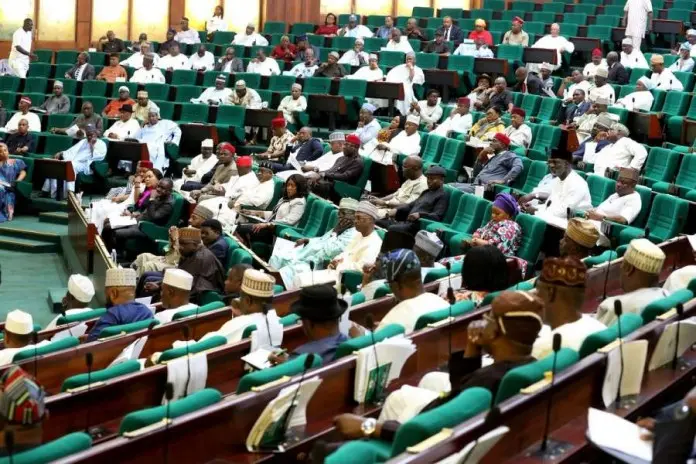
The House of Representatives has passed for second reading a bill seeking to establish a 50-year national economic plan for Nigeria.
The bill, sponsored by Amobi Ogah, seeks to create a legal framework for a long-term economic plan covering 2026 to 2076.
It was debated during Wednesday’s plenary, presided over by Deputy Speaker Benjamin Kalu.
Leading the debate, Ogah said the proposed law was aimed at tackling Nigeria’s long-standing problem of policy inconsistency and short-term development planning.
According to him, successive administrations have introduced several development plans, including Vision 2010, Vision 20:2020 and the Economic Recovery and Growth Plan, but many of them failed due to poor implementation, policy reversals and lack of legal backing.
Ogah said the bill would provide a binding national framework to guide economic planning across different administrations.
He said: “A 50-year national economic plan for Nigeria 2026–2076 represents a bold and transformative legislative initiative aimed at addressing one of the country’s persistent development challenges — policy inconsistency and short-term economic planning.
“The proposed bill seeks to establish a legally binding, long-term economic framework that will guide national development across successive administrations.”
The lawmaker said Nigeria’s inability to sustain development plans had led to abandoned projects, weak institutional coordination and waste of public resources.
He added that the proposed plan would help promote macroeconomic stability, investor confidence and sustainable growth.
According to him, a long-term economic framework would reduce uncertainty, strengthen fiscal and monetary planning, and protect the economy from external shocks, especially fluctuations in global oil prices.
Ogah said the bill would also support economic diversification, strengthen coordination among government institutions and provide legal backing for implementation, monitoring and evaluation.
He added that the proposal was in line with global and continental development models, citing South Africa, Rwanda, Botswana and the African Union’s Agenda 2063 as examples of long-term planning frameworks.
Supporting the bill, House Leader Julius Ihonvbere urged lawmakers to back the proposal, saying it would promote discipline in national planning.
“This is not even about the annual budget but a framework to reposition planning through discipline. This way, any party in power will not deviate from it,” Ihonvbere said.
The bill was subsequently passed for second reading.