

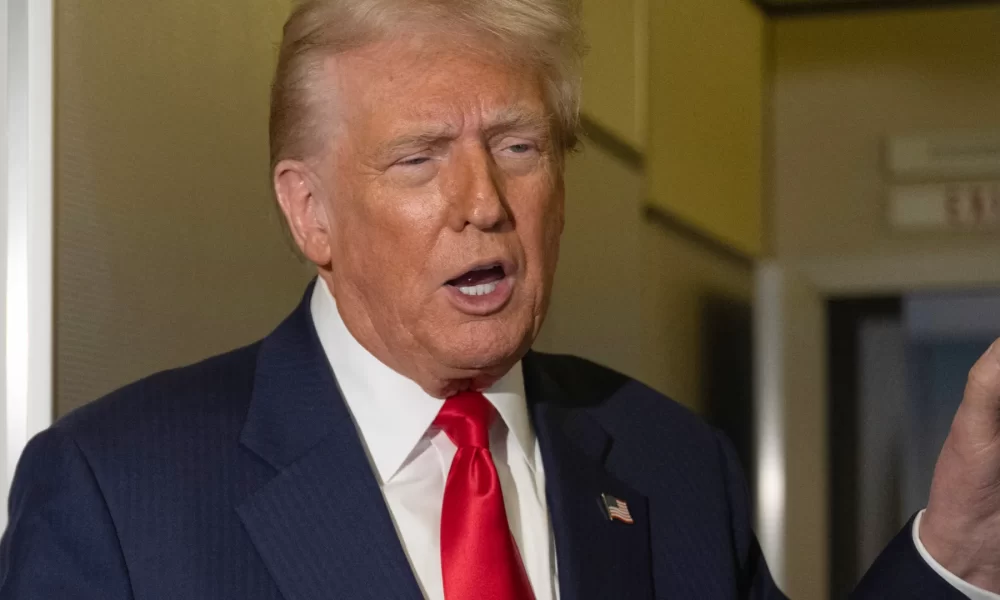
U.S. President Donald Trump has triggered fresh global debate after resharing a social media post proposing that the Strait of Hormuz be renamed the “Strait of Trump,” a move that has drawn reactions from diplomatic and energy circles worldwide.
The post, shared on Truth Social late Wednesday, featured an edited map labeling the strategic waterway—located between the Persian Gulf and the Gulf of Oman—with the president’s name. While widely seen as symbolic, the timing has heightened tensions amid an already fragile security situation in the region.
The development comes during the ongoing 2026 Strait of Hormuz crisis, marked by heightened confrontation between U.S. forces and Iran. The situation has disrupted global shipping, with reports indicating a sharp drop in vessel traffic through the corridor, a key route for international oil supply.
Trump has been engaged in a prolonged standoff with Tehran over its nuclear program and maritime security. In recent remarks, including at the FII Priority Summit, he referenced the naming idea in a lighthearted tone, suggesting it could feature in broader negotiations over reopening the waterway.
Following the post, global oil markets showed signs of volatility, with benchmark prices rising amid concerns that tensions in the region could escalate further. Analysts say traders are closely monitoring signals from Washington for any indication of a tougher stance on maritime access.
Despite the attention generated by the proposal, experts note that renaming an international waterway such as the Strait of Hormuz is not within the authority of any single country.
The route is governed under frameworks such as the United Nations Convention on the Law of the Sea and recognized by global bodies including the International Hydrographic Organization. Any official change would require broad international agreement, which analysts consider highly unlikely.
The controversy comes as energy markets remain sensitive to supply disruptions. Although a temporary easing of tensions earlier in the month allowed limited shipping to resume, the latest development has renewed concerns about prolonged instability in the region.
Iran has yet to issue an official response, though state-linked media have dismissed the move as provocative.
As of April 30, 2026, U.S. naval forces remain on heightened alert in the Persian Gulf. Observers say the social media post may be intended as a political signal rather than a policy shift, but its implications for diplomacy and global markets continue to be closely watched.