

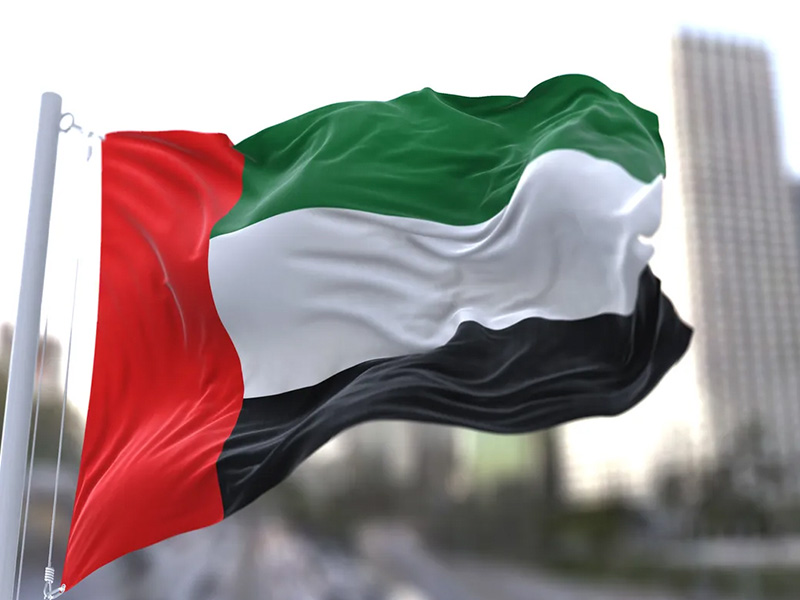
The decision, which will take effect from May 1, 2026, was disclosed in a statement issued on Tuesday by the UAE Ministry of Energy and Infrastructure, following what it described as a comprehensive review of its production strategy and future energy outlook.
Our correspondent obtained a copy of the statement.
Announcing the move, the ministry said the exit reflects the country’s evolving energy priorities and long-term economic vision.
The statement read, “The United Arab Emirates today announced its decision to exit the Organization of the Petroleum Exporting Countries (OPEC and OPEC+), effective 1 May 2026. This decision reflects the UAE’s long-term strategic and economic vision and evolving energy profile, including accelerated investment in domestic energy production, and reinforces its commitment to a responsible, reliable, and forward-looking role in global energy markets.
“This decision follows a comprehensive review of the UAE’s production policy and its current and future capacity and is based on our national interest and our commitment to contributing effectively to meeting the market’s pressing needs.”
The UAE, one of OPEC’s key producers, noted that the decision was anchored on national interest and its desire to respond more flexibly to changing market realities.
“The decision reflects the UAE’s long-term strategic and economic vision and evolving energy profile, including accelerated investment in domestic energy production, and reinforces its commitment to a responsible, reliable, and forward-looking role in global energy markets,” the ministry added.
The announcement comes against the backdrop of escalating geopolitical tensions in the region, particularly the ongoing Iran conflict, which has disrupted oil supply routes and heightened uncertainty in global energy markets.
Of particular concern is the Strait of Hormuz, a critical oil transit corridor through which a significant portion of the world’s crude supply passes. Recent threats and attacks linked to the crisis have raised fears of supply disruptions and price volatility.
The UAE acknowledged these short-term disruptions but maintained that long-term demand fundamentals remain strong.
“While near-term volatility, including disruptions in the Arabian Gulf and the Strait of Hormuz, continues to affect supply dynamics, underlying trends point to sustained growth in global energy demand over the medium to long term,” the statement noted.
The move effectively ends nearly six decades of the UAE’s involvement in OPEC, which it joined in 1967 through Abu Dhabi, years before the formation of the federation in 1971.
Throughout its membership, the UAE has played a central role in shaping production policies and stabilising oil markets alongside key players such as Saudi Arabia.
Despite the exit, the UAE expressed appreciation for the organisation and its allies.
“We reaffirm our appreciation for the efforts of both OPEC and the OPEC+ alliance and wish them success. During our time in the organisation, we made significant contributions and even greater sacrifices for the benefit of all,” the ministry stated.
“However, the time has come to focus our efforts on what our national interest dictates and our commitment to our investors, customers, partners and global energy markets.”
The UAE stressed that its withdrawal does not signal a retreat from global energy cooperation but rather a shift towards greater flexibility in managing its oil output.
It pledged to continue supplying the market in a responsible and measured manner.
“Following its exit, the UAE will continue to act responsibly, bringing additional production to market in a gradual and measured manner, aligned with demand and market conditions,” the statement said.
The country also highlighted its competitive advantage in producing lower-carbon crude, positioning itself as a key supplier in an evolving global energy mix.
“The UAE is a trusted producer of some of the world’s most cost-competitive and lower-carbon barrels, which will play an important role in supporting global growth and emissions reduction,” it added.
The exit could weaken OPEC’s cohesion and complicate efforts to manage global oil supply, especially at a time when geopolitical risks are already straining the system.
The alliance, which includes major non-OPEC producers such as Russia, has been central to stabilising oil prices since its formation in 2016.
However, rising tensions in the Middle East, coupled with shifting national priorities among member states, are increasingly testing the group’s unity.
The UAE said it would continue investing across the energy value chain, including oil, gas, renewables, and low-carbon technologies, as part of a broader diversification strategy.
“It will continue investing across the energy value chain, including oil, gas, renewables, and low-carbon solutions, to support resilience and long-term energy system transformation,” the ministry stated.
The development comes at a critical time for the global economy, with energy markets already under pressure from geopolitical conflicts, supply chain disruptions, and the ongoing transition to cleaner energy sources.
For oil-dependent economies such as Nigeria, the implications are significant, as changes within OPEC and OPEC+ often influence crude prices, government revenues, and foreign exchange earnings, the developments present a mixed outlook, with potential revenue gains from higher crude prices but increased costs for refined petroleum products and broader economic instability.
The UAE’s decision could signal a broader shift in how major producers approach cooperation in an increasingly complex energy landscape.
As the Middle East crisis continues to unfold, attention will now turn to how OPEC responds to the exit, and whether the alliance can maintain unity in the face of mounting geopolitical and economic pressures.
The Organisation of the Petroleum Exporting Countries is one of the world’s most influential energy alliances, created in 1960 by five founding members, Iran, Iraq, Kuwait, Saudi Arabia, and Venezuela, during a meeting in Baghdad.
The group was established to coordinate petroleum policies among oil-producing countries, stabilise international oil markets, secure fair prices for producers, and ensure a steady supply of crude to consuming nations.
Over the decades, OPEC grew into a major force in the global economy, with its decisions on oil production often influencing crude prices worldwide. By increasing or cutting output quotas, the group can affect supply levels, making it a central player in determining global energy costs.
Its current members include major producers such as Saudi Arabia, the United Arab Emirates, Nigeria, Algeria, Libya, and Iraq.
While, OPEC+ is an expanded alliance formed in 2016 to include OPEC members and major non-OPEC oil-producing countries.
The “plus” refers to 10 additional producers led by Russia, alongside countries such as Kazakhstan, Mexico, and Oman.
The alliance was created after the 2014–2016 oil price crash, when crude prices plunged due to oversupply and weak demand.
Their monthly meetings are closely watched by governments, investors, refiners, and energy traders because any decision to raise or cut output can immediately influence international crude benchmarks such as Brent crude and West Texas Intermediate.
SPONSORED