

Security experts have blamed insecurity in Nigeria on the proliferation of small arms and light weapons.
According to them, the weapons are smuggled through the borders and circulated across the country.
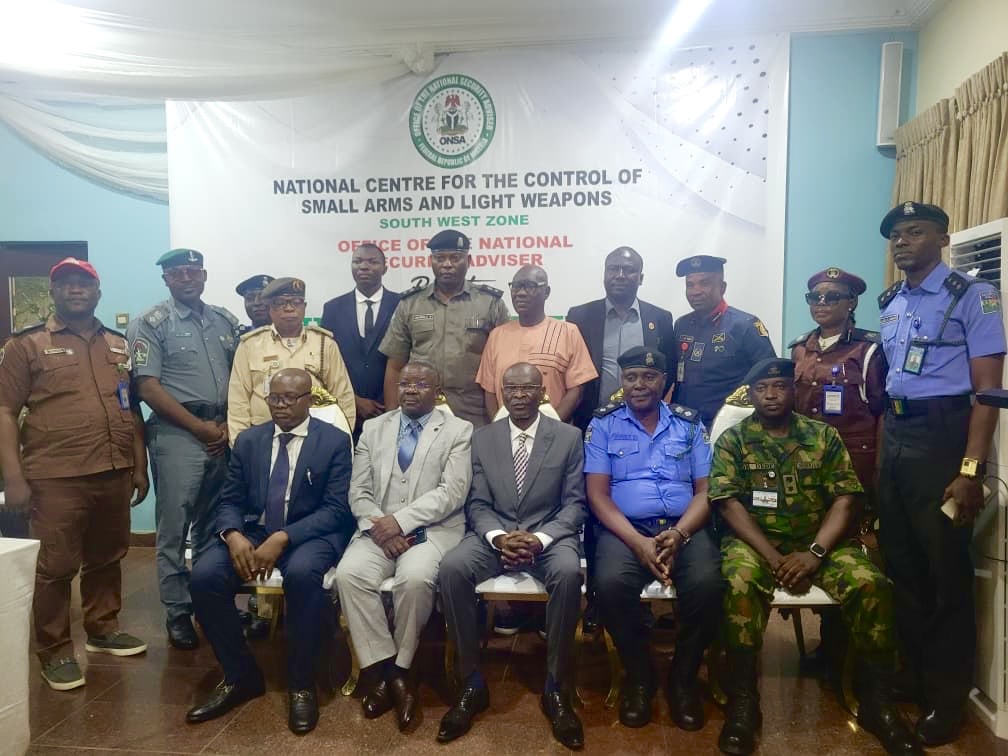
They spoke on Thursday during a one-day seminar on Effective Post-Judgment Management of Small Arms and Light Weapons, organized by the National Centre For The Control of Small Arms and Light Weapons (NCCSALW), held in Abeokuta, Ogun State.
Speaking at the event, the Zonal Director, South-West Zone NCCSALW, CP Abiodun Alamutu (rtd) lamented that these large chunk of arms get into the hands of non-state actors and perpetrators of crime.
Alamutu stressed the urgency and need to mop up illicit arms already in circulation, calling for collaboration with traditional rulers, community leaders among other relevant stakeholders.
He said, “So far, we have discovered that the major enabler of insecurity, banditry, terrorism in the country is the proliferation of small arms and light weapons. And we have equally discovered that a large chunk of these arms are in the hands of non-state actors.
“And that explains why we want to now shift our focus to mopping up of those illicit arms that are already in circulation. The bulk of the successes we have recorded has been at the border points, those that are about to come into our society. And we have made tremendous successes in that.
“But now, we want to divert our attention into mopping up those that are already in circulation. That is why we require the active collaboration of stakeholders, traditional rulers, NGOs, community leaders to talk into the minds of these criminals so that those that will involuntarily bring out these arms will.”
Alamutu disclosed that in the South-West, about five million illegal arms are in circulation, harping on the need for immediate mop up.
“We should not take things for granted. We should put up a system that will ensure that such illicit arms we have in circulation are mopped up. Some claim the estimate is up to five million, but we cannot say categorically this is the number. But from records available, it falls within or quite above five million,” he said.
Also speaking, the Ogun State Commissioner of Police, Bode Ojajuni, stressed the need for better coordination in handling recovered weapons.
He said, “We have many of these arms that have been recovered… and they are in the police armories. I feel that the center should devise another avenue to mop up these weapons immediately.”
Ojajuni warned against delays in transferring recovered arms, noting potential risks and called for a structured system across states to ensure timely collection and transfer of seized arms to the NCCSALW.
Meanwhile, the resource person, Dr. Kunle Olawuni, argued that most seized weapons are poorly documented, court exhibits remain in insecure armories for prolonged periods, and weak inter-agency handover protocols after conviction or forfeiture create room for theft, substitution, leakage, or re-circulation into criminal networks.
Olawuni who is the HOD, International Relations & Diplomacy, Chrisland University, Abeokuta, recommended a shift from fragmented paper-based practices to a secure digital record system linked to case numbers, exhibit identifiers, court orders, and disposition status.
He also called for the adoption of specialized armory standards, advocating periodic audits backed by documentary reconciliation and accountability measures for any discrepancies.