

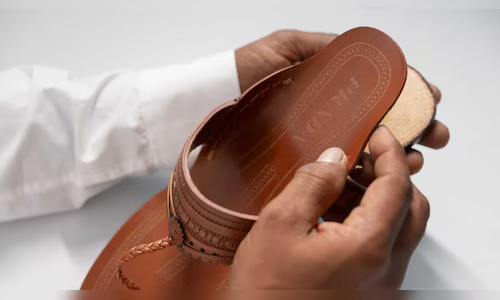
This time, the brand has placed India at the centre of the story, both in production and messaging.
The sandals, priced at around €750 (around ₹83,000) per pair, are being sold across 40 Prada stores worldwide and through its online platform, BBC reported.
In a statement, the company stated that the pieces are handcrafted in India by artisans from Maharashtra and Karnataka, regions traditionally known for producing Kolhapuri sandals.
It said the collection is developed in collaboration with LIDCOM (Sant Rohidas Leather Industries and Charmakar Development Corporation Ltd) and LIDKAR (Dr Babu Jagjivan Ram Leather Industries Development Corporation Ltd) – Indian government organisations focused on safeguarding, promoting and developing the Indian leather industry and heritage of Kolhapuri Chappals.
This comes after backlash in 2025, when Prada showcased similar toe-loop sandals at a Milan fashion show. It described them simply as “leather sandals,” without crediting their Indian roots.
The omission drew criticism from designers and cultural commentators, prompting the brand to later acknowledge the inspiration.
This time, Prada says the collection is designed as a blend of traditional techniques and modern luxury design, positioning it as a blend of heritage craft and contemporary fashion.
In addition to the product launch, Prada has announced a three-year training programme aimed at supporting Indian artisans.
Developed in collaboration with National Institute of Fashion Technology and another design institute, the initiative will train 180 artisans from eight districts linked to Kolhapuri production.
The training will be conducted in six-month modules, with select participants getting an opportunity to continue learning at the Prada Group Academy in Italy.
“Supporting artisans through structured training means safeguarding knowledge, strengthening local communities, and ensuring that traditional craftsmanship continues to evolve and thrive,” said Lorenzo Bertelli, Prada Group Head of Corporate Social Responsibility.
Prerna Deshbhratar, LIDCOM Managing Director, said: “This collaboration will enable sustainable global positioning of our traditional craftsmanship, fostering cross-cultural design dialogue and long-term value for artisans.”
Kolhapuri sandals, named after the city of Kolhapur, date back to the 12th century. They were granted Geographical Indication (GI) status by the government in 2019, recognising their regional authenticity. In India, they are typically priced between ₹500 and ₹1,000, making Prada’s version significantly more expensive.
The launch once again highlights the ongoing conversation around global fashion brands drawing from traditional crafts but this time, by giving the credit to the artisans behind the legacy.