

The Lagos state government has launched a new Industrial Policy for 2025–2030, setting out a broad strategy to reposition the state’s industrial sector for sustainable growth and stronger global competitiveness.
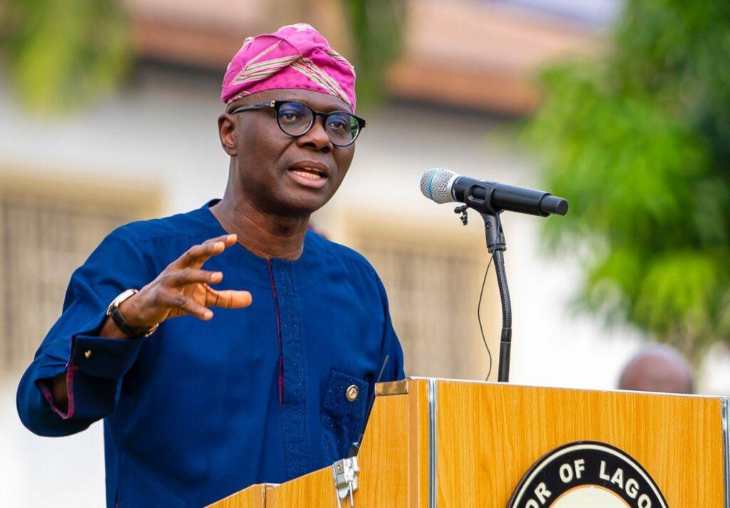
Governor Babajide Sanwo-Olu, represented by Abimbola Saliu-Hundeyin, the secretary to the state government said the policy provides a structured framework to “reform, rebuild and reposition” Lagos’ industrial base for long-term economic expansion.
Speaking on Thursday at the unveiling in Lagos, the governor described the initiative as the outcome of extensive consultations, technical work and stakeholder engagement across both public and private sectors.
“The global industrial landscape is evolving rapidly, with supply chains shifting and competitiveness now defined by innovation, resilience and adaptability,” he said.
He noted that the policy is designed to tackle structural challenges, unlock investment opportunities and establish the industrial sector as a key driver of inclusive growth.
According to him, it aligns with Lagos’ ambition to become a globally competitive mega-city powered by productivity, innovation and exports.
Sanwo-Olu added that the framework supports Nigeria’s commitments under the African Continental Free Trade Area, positioning Lagos as a strategic hub for regional and international trade.
“By prioritising key sectors, the policy will accelerate industrial productivity and strengthen Lagos as a gateway for participation in global markets,” he said.
The governor emphasised that regulatory reforms would be central to implementation, with efforts aimed at improving the ease of doing business and ensuring a predictable operating environment for investors.
“We are committed to creating an environment where businesses can operate efficiently, supported by clear regulations and consistent policy direction,” he added.
On financing, he said the state is collaborating with financial institutions and development partners to unlock capital and de-risk investment opportunities in the industrial sector.
Workforce development was also highlighted as a core pillar. “We are advancing skills development to ensure our workforce is prepared for the demands of a modern and competitive industrial economy,” he said, adding that innovation, technology and sustainability would shape the future of production.
In her remarks, Folashade Ambrose-Medebem, commissioner for commerce, cooperatives, trade and investment described the policy as a bold step towards placing Lagos among globally competitive economies.
“Africa’s industrial future is being shaped by economies with the courage to plan and the discipline to execute. Lagos must be one of them,” she said.
She added that the policy serves as a “covenant” between government and residents, aimed at expanding opportunities across both formal and informal sectors, while strengthening local production and value chains.
Also speaking, John Owan-Enoh, minister of state for industry, trade and investment commended the initiative, noting that it aligns with the national industrial development agenda.
This newspaper reports that the policy outlines clear timelines, responsibilities and measurable targets, with expectations that it will boost investment, enhance industrial capacity and create jobs across the state.