

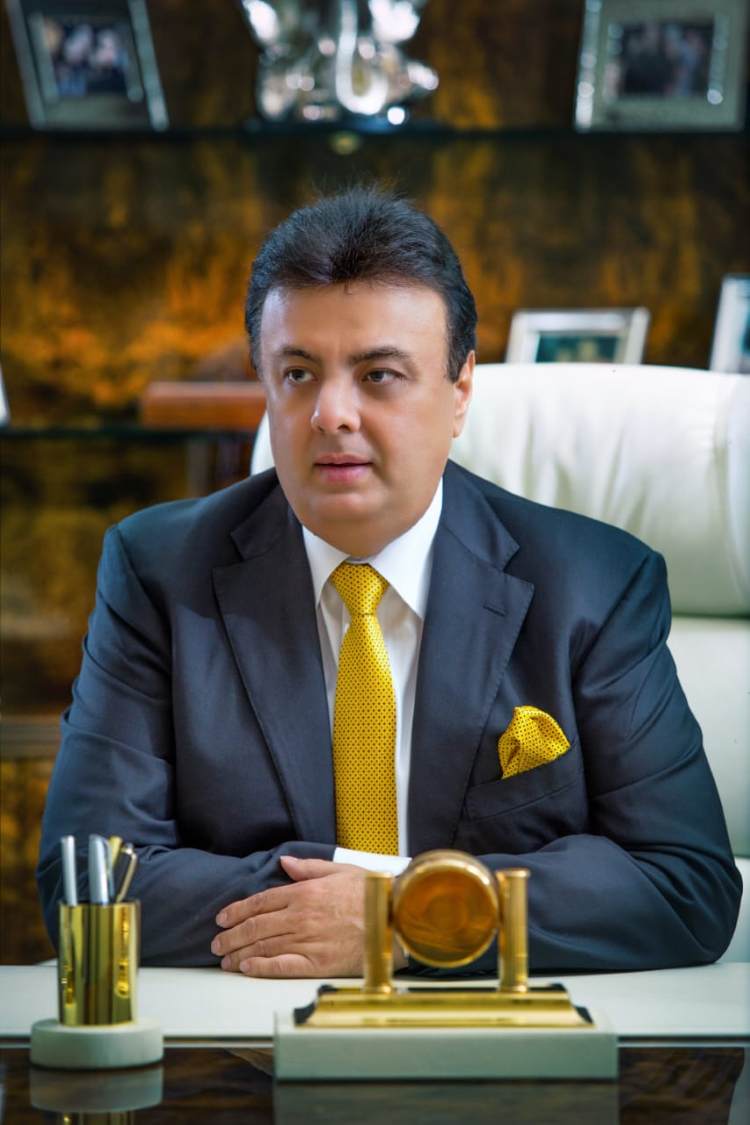
The arraignment of Sunil Vaswani, an Indian-born Nigerian businessman and his firm, Stallion MG Automobiles Limited, over an alleged N2 billion money laundering case was stalled at the Federal High Court in Lagos due to the absence of the defendants.
Sunil Vaswani, who is said by the Economic and Financial Crimes Commission (EFCC) to be at large, was scheduled to be arraigned alongside Harpreet Singh and Olalere Tajudeen, both directors in the automobile company.
However, none of the defendants appeared in court, and no legal representation was announced on their behalf.
The EFCC is also prosecuting a related case involving another Vaswani-linked firm, Stallion Auto Keke Limited, alongside Tajudeen, over separate allegations of laundering funds running into billions.
In two sets of charges, the anti-graft agency accused the defendants of collectively laundering about N2.06 billion between November 2022 and February 2024.
The charges largely centre on alleged failures to report high-value cash transactions to the Special Control Unit Against Money Laundering (SCUML), as required by law.
One of the counts alleges that between February 14 and November 29, 2023, Vaswani, Stallion MG Automobiles, Singh, and Tajudeen failed to notify SCUML before lodging N655.35 million into an account with Providus Bank.
In another charge, Stallion Auto Keke Limited and Tajudeen were accused of similar infractions involving N1.405 billion between November 2020 and December 2021.
According to the EFCC, the alleged offences contravene provisions of the Money Laundering (Prohibition) Act, 2022.
At Thursday’s proceedings, EFCC counsel, Henry O. Anaso, told the court that efforts to secure the defendants’ attendance had been unsuccessful, prompting an application for adjournment.
The presiding judge, Chukwujekwu Aneke, granted the request and adjourned the matter until July 21 for arraignment.
The case adds to a growing list of high-profile financial crime prosecutions affected by the absence of defendants, raising concerns about enforcement and compliance within Nigeria’s anti-money laundering framework.