

The Federal High Court in Abuja has approved special protection for a key prosecution witness in the ongoing trial of a retired army general and five others accused of plotting a failed coup against President Bola Tinubu.
Politics Nigeria reports that the ruling came on Wednesday as the case formally opened before Justice Joyce Abdulmalik.
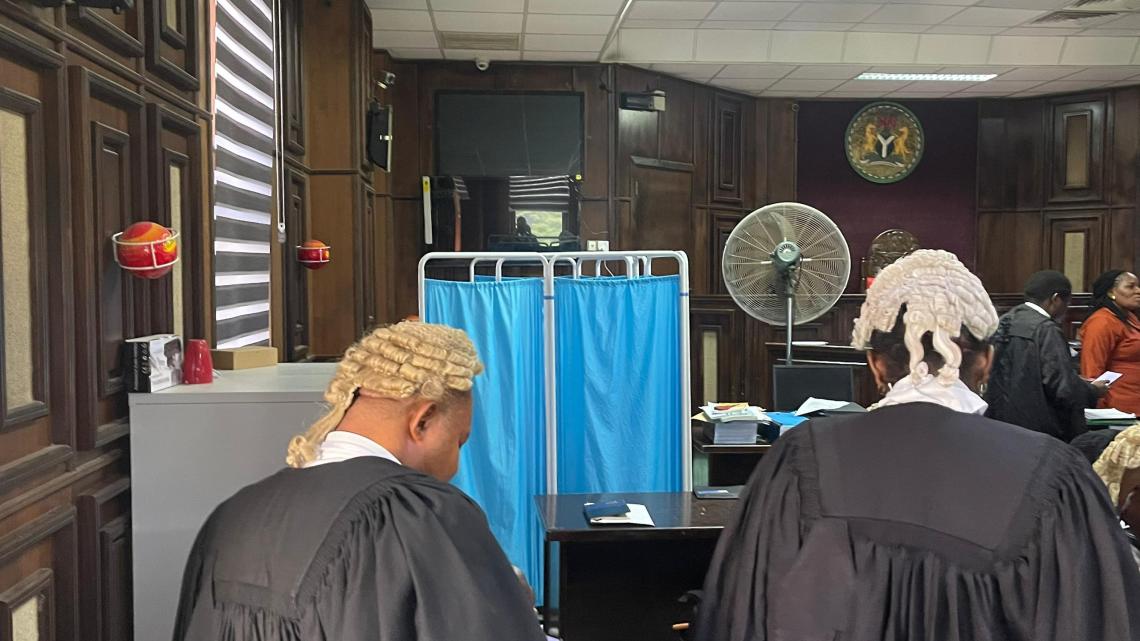
The court granted the request after the prosecution raised security concerns. The judge ruled that the witness would testify under strict protection. This includes appearing behind a screen to prevent public identification. The court also ordered that the real name of the witness must not be disclosed during proceedings.
The trial centers on a 13-count charge filed by the Federal Government. The charges include treason, terrorism, failure to disclose information, and money laundering.
The defendants include Mohammed Ibrahim Gana, a retired major-general; Erasmus Ochegobia Victor; Ahmed Ibrahim; and Zekeri Umoru. Others are Bukar Kashim Goni and Abdulkadir Sani.
All six defendants were first arraigned on April 22. They pleaded not guilty to the charges brought against them.
At Wednesday’s hearing, prosecution counsel Rotimi Oyedepo informed the court that four witnesses were ready to testify. Three of them, officials from financial institutions, gave evidence. They represented Jaiz Bank, SunTrust Bank, and Providus Bank.
These witnesses presented documents linked to investigations by the Economic and Financial Crimes Commission. The documents were admitted as evidence. The witnesses were also cross-examined by defence lawyers.
Tension rose when the fourth witness was called. The prosecution applied for special protection, citing security risks. Oyedepo told the court the witness needed to be shielded to prevent “unnecessary attack.” He relied on Section 232 of the Administration of Criminal Justice Act.
According to him, the law allows courts to protect witnesses in sensitive cases. He stressed that the charges involve national security and terrorism. He added that the witness is a serving officer and could be exposed to danger if identified.
Lawyers representing the defendants did not oppose the use of protective measures. However, they raised concerns about fairness. They argued that while shielding the witness from the public may be acceptable, the defence must still know who the witness is. They said denying this would affect their ability to properly challenge the testimony.
They urged the court to balance security and justice. They suggested limiting public access to sensitive parts of the trial instead of full anonymity.
In response, the prosecution maintained that full protection was necessary. Oyedepo insisted that the law permits non-disclosure of identity. He said the use of initials or coded identification was allowed under existing provisions.
Delivering her ruling, Justice Abdulmalik agreed with the prosecution. She said the request was justified, especially given the nature of the charges.
She stated, “The law permits protective measures, including non-disclosure of names, addresses and contact details where the court is satisfied that security concerns exist.”
The judge held that Section 232 supports such measures in cases involving terrorism and national security. She added that judicial precedents also back the decision.
The court then ordered that the witness be shielded from public view. It further ruled that the witness’s identity must not appear in court records accessible to the public or the parties.
Proceedings began around 11 a.m. The ruling on the protection request was delivered at about 2 p.m. The court then stood down briefly to allow a protective screen to be installed before the witness testified.
The trial is expected to continue with more witnesses lined up by the prosecution.
More details later…